
The traditional Caballero de Fuego (known in the Maya language as Ts’uul K’áak’ or Ts’uulil K’áak’), one of the most emblematic cultural rituals of the town of Nunkiní in the Calkiní municipality, has officially been declared Intangible Cultural Heritage of the State of Campeche.
The executive decree, published in the Official Gazette of the State, formally incorporates this ancestral ritual into the state’s cultural registry. According to official reports, the declaration is the result of an extensive three-year technical evaluation and a prior, free, and informed consultation process with the local indigenous community, respecting the collective rights of the Maya people.
Deeply rooted in religious syncretism, the Caballero de Fuego (Gentleman of Fire) is a centerpiece of the annual ritual cycle dedicated to San Diego de Alcalá, Nunkiní’s patron saint. Oral tradition dictates that the ritual originated centuries ago during a devastating smallpox epidemic. A Maya priest (j’men) received a divine revelation to construct a large human-like effigy. Designed to resemble a Spanish landowner, the figure was loaded with gunpowder and incinerated to absorb and banish the “bad winds” and illnesses afflicting the town.
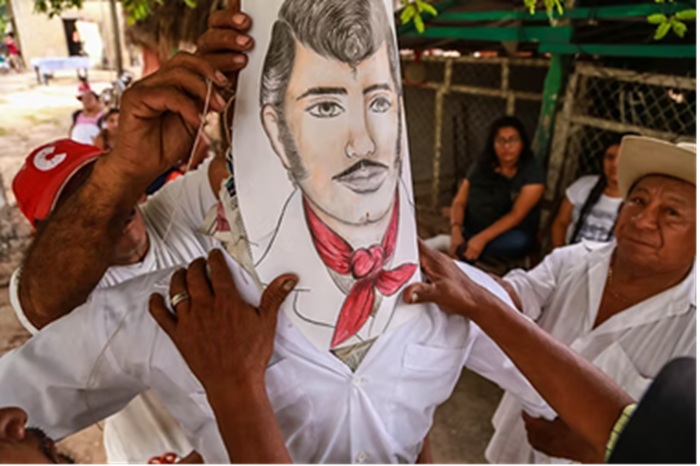
The effigy is constructed using regional materials like chimay wood, wild vines, and sosquil (henequen fiber), and is dressed in donated clothing with a hand-drawn face. Over three days, the figure is paraded through the town’s eight neighborhoods to collect community prayers and offerings before being dramatically inmolated in front of the local church.

This official cultural designation guarantees legal safeguard, preservation, and state-funded resources to protect the festival. It ensures that the living history, spiritual renewal, and unique identity of the Calkiní region continue to be transmitted to future generations.
Source: N+